Think about how many connected devices were in your home five years ago versus today. From smart speakers and security cameras to multiple laptops and gaming consoles, our demand for bandwidth is constantly growing. A solid 1 Gig connection handles today’s needs well, but what about tomorrow’s? Upgrading your connection is about more than just faster downloads; it’s about building a foundation that can support the next wave of technology. This is the core idea behind 2.5 gig internet. It provides the capacity to ensure your home network runs smoothly not just now, but for years to come, ready for 8K streaming, immersive VR, and whatever else is around the corner.
Key Takeaways
- Ideal for Power Users and Connected Homes: A 2.5 Gig plan is best for households with specific, high-demand needs, such as content creators uploading large files, competitive gamers seeking maximum stability, or smart homes running dozens of devices at once.
- Your Equipment Must Be Compatible: To get multi-gig speeds, your entire network needs to be ready. This means your router and connected devices, like a computer or gaming console, must have 2.5 Gbps ports to avoid creating a bottleneck that limits performance.
- Assess Your Internet Habits Before Upgrading: Before making the switch, consider if your current connection causes slowdowns. If you aren't experiencing lag or long waits, a 2.5 Gig plan might be more speed than you need; it provides the most value when solving an existing performance problem.
What Is 2.5 Gig Internet?
You’ve probably heard of 1 Gig internet, which has been the gold standard for fast home connections for a while. So, what is 2.5 Gig internet? Simply put, it’s the next level up. A 2.5 Gig plan delivers speeds of up to 2.5 gigabits per second (Gbps), which is two and a half times faster than a standard 1 Gig connection. This isn't just a small jump; it's a significant leap forward in performance.
This kind of speed is designed for households that do more than just browse and check email. It’s for homes where multiple people are streaming 4K movies, playing competitive online games, and video conferencing all at the same time. With symmetrical upload and download speeds, a feature of fiber internet, you get that incredible performance whether you're downloading a huge file or uploading a high-resolution video. It’s about removing the ceiling on what your home network can handle, ensuring a smooth, buffer-free experience for everyone. Exploring our services can give you a better idea of how these speeds fit into different plans.
How Fast Is It, Really?
It’s easy to say "2.5 times faster," but what does that feel like in the real world? Let's put it in perspective. Imagine you need to download a large 10 GB file, like a new video game or a 4K movie. On a standard 1 Gig connection, that would take a little over a minute. With 2.5 Gig internet, you could have that same file downloaded in about 32 seconds.
This speed makes a huge difference for tasks that involve large amounts of data. For content creators uploading videos to YouTube, remote workers sending massive project files, or families backing up their photos to the cloud, these time savings add up. It’s the kind of speed that makes lag and buffering feel like a thing of the past, even when multiple devices are connected and running demanding applications.
How It Compares to Standard Speeds
A 1 Gig connection is fantastic for most online activities, from streaming HD shows to everyday web browsing. It’s a solid, reliable speed that serves many households well. However, a 2.5 Gig plan is built for the modern, hyper-connected home. If your family has multiple gamers, streamers, and remote workers all using the internet heavily at once, you might notice a 1 Gig connection starting to strain.
With 2.5 Gig internet, that strain disappears. It provides enough bandwidth to handle dozens of connected devices simultaneously without anyone’s experience suffering. This includes everything from your laptop and smart TV to your security cameras and smart speakers. It’s about future-proofing your home, ensuring your network can handle not just today’s technology but also the more demanding applications and devices that are just around the corner.
Clearing Up Common Myths
One common myth is that you'll always experience the maximum advertised speed 24/7. In reality, "2.5 Gbps" represents the top speed your connection can reach under ideal conditions. Your actual speeds can vary based on several factors, including the quality of your router, the capabilities of your device, and even the server you're connecting to. Think of it as the speed limit on a highway; your car can go that fast, but traffic and road conditions might slow you down.
Another point of confusion is the difference between your internet speed and your home network speed. A 2.5 Gig internet plan brings incredible speed to your home, but you need the right equipment to distribute it. If you connect a brand-new 2.5 Gig plan to an old router or a computer with a 1 Gig Ethernet port, your network speed will be stuck at 1 Gbps. To get the full benefit, your entire setup needs to be ready for multi-gig speeds.
What Equipment Do You Need for 2.5 Gig Internet?
Getting ultra-fast internet is exciting, but to actually experience those top-tier speeds, your home equipment needs to be up to the task. Think of it like having a sports car; you can’t enjoy its full power if you’re stuck on a dirt road. The good news is that getting your home network ready for 2.5 Gig speeds is more straightforward than you might think. You just need to make sure a few key pieces of hardware can handle the connection, from the router that brings the internet into your home to the devices you use every day.
Finding the Right Router and Modem
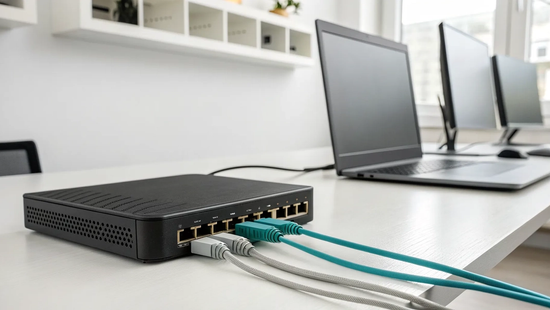
Your router is the heart of your home network. To get speeds over 1 Gig, you need a router and modem that are specifically built for it. This means they must have a 2.5 Gbps (or higher) WAN port to receive the signal from your provider and at least one 2.5 Gbps LAN port to send that signal to your devices. When you sign up for one of our high-speed fiber plans, we make sure you have the right equipment, so you don’t have to sort through confusing tech specs. We provide a gateway that’s fully capable of delivering the speeds you’re paying for.
Checking Your Device and Cable Compatibility
Once the internet signal gets past your router, it needs a clear path to your computer, gaming console, or smart TV. For a wired connection, this path is your Ethernet cable and the port on your device. The great thing about 2.5 Gig technology is that it’s designed to work with the cables many people already have. Your existing Category 5E (Cat5e) and Category 6 (Cat6) cables can support these faster speeds. The final step is to check the Ethernet port on your device. Many newer computers and motherboards come with a 2.5G port built right in.
Adapters and Cards for Older Devices
What if your favorite laptop or trusty desktop doesn’t have a 2.5G port? Don’t worry, you don’t need to buy a whole new computer. You can easily upgrade your existing hardware with an affordable adapter. For a desktop computer, you can install a PCIe 2.5G network card. For a laptop, a simple USB-to-2.5G adapter will do the trick. These accessories are widely available and provide a simple, plug-and-play solution to get your older devices connected at multi-gig speeds, ensuring you get the performance you expect from your internet plan.
Why Your Ethernet Cable Matters
While your current Cat5e cables can handle 2.5 Gig speeds over typical household distances (up to 100 meters), the quality of your cable still plays a role in the stability of your connection. If you’re running new cables or want to ensure the most reliable performance, opting for Cat6 or Cat6a is a smart choice. These cables have better shielding against interference and provide a more robust connection, which is great for future-proofing your home network. If you ever have questions about your setup, our local support team is always here to help you get everything running smoothly.
How Does 2.5 Gig Internet Work?
So, what’s happening behind the scenes to deliver these incredible speeds to your devices? It’s not magic, but it is a smart evolution in technology designed to keep up with our increasingly connected lives. Understanding how it works helps you get the most out of your connection. It’s all about making sure the super-fast internet you get from the outside world can actually travel at full speed inside your home.
Think of it like upgrading the plumbing in your house. You can have amazing water pressure from the city, but if your internal pipes are too narrow, you’ll only ever get a trickle from the faucet. 2.5 gig internet is about widening those pipes so you can enjoy the full flow of a high-speed fiber connection everywhere, from your work laptop to your smart TV. This involves a specific networking standard and ensuring all your gear, from the router to your computer, can speak the same high-speed language. It’s a holistic approach where your internet plan, your home network, and your devices all work together in harmony. When everything is aligned, you unlock the true potential of multi-gig speeds for seamless streaming, instant downloads, and lag-free gaming. Let’s break down the key pieces of the puzzle.
A Quick Look at the Technology
At its core, 2.5 gig internet relies on a networking standard called 2.5 Gigabit Ethernet, or 2.5GbE. This standard allows your wired connections to handle data up to 2.5 gigabits per second (Gbps), which is a full 2.5 times faster than the traditional 1 gigabit standard that has been common for years. This technology was specifically developed to meet the demands of modern life. With the rise of 4K and 8K video streaming, powerful Wi-Fi 6 routers, and the need to quickly access large files, the old 1 gigabit speed was becoming a bottleneck. 2.5GbE breaks through that barrier, creating a faster, more efficient pathway for data to travel between your devices.
Your Internet Speed vs. Your Local Network Speed
This is a really important distinction to understand. Your internet speed is the rate at which data comes into and leaves your home, which is determined by the internet plan you have with your provider. Your local network speed, on the other hand, is how fast data moves between devices within your home. For example, transferring a large video file from your desktop computer to a network storage drive. Upgrading your hardware to 2.5 gig equipment will speed up those local transfers. But to actually browse, stream, and download from the internet at 2.5 gig speeds, you need an internet plan that delivers that performance to your door.
What Needs to Align for Top Speeds
To get true 2.5 gig performance, your entire setup needs to be ready for it. Your network is only as fast as its slowest component. This means your modem, your router, and the device you’re using (like your computer or gaming console) must all have 2.5 gig ports. If any one of these is a standard 1 gig device, your speed will be limited to 1 Gbps. The good news? You probably don’t need to rewire your house. Most modern Ethernet cables, specifically Category 5e (Cat5e) and Category 6 (Cat6), are already capable of handling these faster speeds. If you have questions about your setup, our support team is always here to help.
Is a 2.5 Gig Plan Right for You?
Deciding on the right internet speed can feel a lot like choosing a new car. A standard sedan gets you where you need to go just fine, but sometimes you need the power and space of an SUV. A 1 Gig plan is fantastic for most online activities, but certain households and hobbies can really stretch its limits. If you’ve ever felt a slowdown while someone else was streaming, or waited impatiently for a huge file to upload, you might be ready for an upgrade.
A 2.5 Gig plan isn’t just about a bigger number; it’s about creating more room on your digital highway for everyone and everything at once. It’s for the households that do more, create more, and connect more. Let’s break down who benefits most from this extra speed to see if your home fits the bill.
For the Streamer and Content Creator
If your work or hobby involves creating and sharing content, you know that time is money. Waiting for a 4K video to upload to YouTube or transferring massive project files to a client can bring your workflow to a halt. A 2.5 Gig plan dramatically cuts down those wait times. It provides the bandwidth you need to live stream in high definition without a single dropped frame, even while your family is streaming movies in the next room. This makes your home network a practical and powerful tool, ready for modern creative demands and ensuring your internet service never becomes a bottleneck.
For the Serious Gamer
Every gamer knows the frustration of lag. While a 1 Gig connection is usually fast enough for gameplay, a 2.5 Gig plan offers something just as important: stability. Think of it as adding extra lanes to a highway. When your connection is the only car on the road, things are smooth. But when your roommate starts a 4K stream or your smart home devices all check in at once, that highway gets crowded. A 2.5 Gig plan provides so much bandwidth that your game’s data can always find a clear path, helping to reduce lag and keep your connection stable during intense moments. Plus, downloading new games and massive updates will be unbelievably fast.
For the Power Remote Worker
Working from home has become the new normal for many, and a reliable connection is non-negotiable. For power users who juggle constant video conferences, cloud-based software, and large file transfers, a 2.5 Gig plan is a game-changer. With symmetrical upload and download speeds, you can send a massive presentation to your team as quickly as you can download it. This is especially crucial in a multi-user household where several people might be working or learning online simultaneously. With a provider built on trust, your home office can be even more efficient than your corporate one.
For the Fully Connected Smart Home
Your smart home is only as smart as the network it runs on. Every security camera, smart speaker, thermostat, and lightbulb needs a piece of your internet connection. While one or two devices won't slow you down, a home full of them can create significant network congestion. A 2.5 Gig plan provides a robust foundation for dozens of connected devices to run seamlessly at the same time. It also future-proofs your home, ensuring you’re ready for the next generation of data-hungry gadgets. You can build the smart home of your dreams without ever worrying if your network can handle it, and our support team is always here to help.
The Pros and Cons of 2.5 Gig Speed
Jumping to a 2.5 Gig internet plan sounds amazing, and for many homes, it truly is a game-changer. This level of speed can handle just about anything you throw at it, from data-heavy remote work to a full house of streamers and gamers, all without breaking a sweat. It’s about more than just fast downloads; it’s about creating a digital environment where lag, buffering, and slowdowns are things of the past. With a connection this powerful, you’re not just keeping up with today’s technology, you’re getting your home ready for whatever comes next, whether that’s 8K streaming, immersive virtual reality, or smart home devices we haven’t even imagined yet.
However, it’s not as simple as just flipping a switch. Getting the most out of a multi-gig plan requires a little homework. The biggest thing to remember is that your internet service is only one part of the equation. Your personal devices, from your router to your laptop, also need to be able to handle these next-level speeds. Think of it like having a sports car: you can’t experience its full power if you’re stuck on a dirt road. We’ll walk through the incredible benefits and the practical considerations to help you decide if one of our high-speed fiber plans is the right fit for you.
Pro: Lightning-Fast Local File Transfers
If you’re a content creator, photographer, or anyone who works with massive files, you know the pain of waiting for them to transfer. With a 2.5 Gig connection, moving huge files between devices on your home network becomes incredibly fast. Imagine transferring hours of 4K video footage from your camera to your network-attached storage (NAS) drive in a fraction of the time it used to take. This isn't about your internet download speed, but the speed of your local network. A 2.5 Gbps setup allows your compatible devices to communicate with each other at incredible speeds, streamlining your workflow and giving you back valuable time.
Pro: Flawless 4K and 8K Streaming
Say goodbye to buffering for good. A 2.5 Gig plan provides more than enough bandwidth to stream crystal-clear 4K and even 8K content on multiple screens at once. This means one person can be watching a blockbuster in the living room, another can be on a high-definition video call for work, and someone else can be gaming online, all without a single stutter. This massive capacity ensures that your entertainment and work are never interrupted, no matter how many people or devices are connected. It’s the kind of smooth, reliable performance that makes your digital life feel effortless and keeps everyone in the house happy.
Con: Potential Device Hurdles
Before you can enjoy multi-gig speeds, you need to make sure your devices are up to the task. Many computers, laptops, and gaming consoles come with a standard 1 Gbps Ethernet port, which means they can't physically accept speeds faster than that. The component responsible for this is the Network Interface Card, or NIC. To get the full 2.5 Gig experience on a wired connection, your device needs a multi-gig port. While many newer high-end devices include them, it’s something you’ll want to check on your existing hardware. The good news is that if your devices aren't ready, you can often upgrade them with an adapter.
Con: Avoiding Network Bottlenecks
Your internet connection is only as fast as its weakest link. To truly get 2.5 Gig speeds, every piece of your network setup has to be compatible. This includes your modem, your router, and even the Ethernet cables connecting everything. If you sign up for a 2.5 Gig plan but are still using an old router or cables that are only rated for 1 Gbps, you’ll create a bottleneck that caps your speed. Think of it as a superhighway suddenly narrowing to a single lane. Ensuring your entire setup supports multi-gig speeds is key to unlocking the incredible performance you’re paying for.
How 2.5 Gig Stacks Up to Other Speeds
When you see different internet speeds advertised, it can be tough to picture what those numbers mean for your daily life. A 2.5 Gig plan is a significant step up from the standard 1 Gig connection, but how does it compare in practical terms? Let's break down the differences to help you see where 2.5 Gig fits in and what you can realistically expect from this powerful upgrade.
2.5 Gig vs. 1 Gig: What's the Real Difference?
On paper, the math is simple: 2.5 Gig internet is 2.5 times faster than a 1 Gig connection. But what does that feel like? Imagine downloading a large 10GB file, like a new video game or a 4K movie. With a 1 Gig plan, you’d wait over a minute. With 2.5 Gig, that same file is on your device in about 32 seconds. This speed difference becomes even more noticeable in a busy home. A 1 Gig plan can handle a lot, but a 2.5 Gig plan gives you so much more breathing room. It ensures that one person’s massive download doesn’t slow down another’s crucial video call or interrupt a family movie night. It’s about having enough bandwidth for everyone to do their thing at top speed, all at once.
2.5 Gig vs. 10 Gig: Cost and Performance
If 2.5 Gig is great, then 10 Gig must be better, right? While 10 Gig is incredibly fast, it’s often more than what a typical home or small business needs. Think of it as the difference between a sports car and a Formula 1 racer. The 10 Gig option is built for large companies and data centers, requiring specialized, expensive equipment and often new wiring. On the other hand, 2.5 Gig hits the sweet spot. It provides a massive performance jump over 1 Gig and, best of all, it’s designed to work with the Cat5e and Cat6 Ethernet cables already in many homes. This makes upgrading to one of our 2.5 Gig internet plans much simpler and more affordable.
Setting Realistic Performance Expectations
It’s important to know that your internet plan’s speed is the maximum speed delivered to your home. The actual speed you experience on a single device depends on a few things: its hardware, whether you’re on Wi-Fi or a wired connection, and the quality of your cables. While a single wired connection might top out at 1 Gbps due to your device’s port, the true magic of a 2.5 Gig plan is the total available bandwidth. It means multiple devices can each pull their maximum speed without getting in each other’s way. So, you can have a 4K stream running flawlessly in the living room while someone else is gaming with low latency upstairs. It’s all about creating a smoother, faster experience for your entire household.
Is 2.5 Gig Internet Worth It for You?
Deciding whether to upgrade your internet is a big deal. While the idea of 2.5 Gig speeds is exciting, it’s not a one-size-fits-all solution. The real question is whether this powerful connection matches your digital lifestyle. It’s about finding the perfect fit for how you and your family actually use the internet every day. Let’s break down how to figure out if a 2.5 Gig plan is the right move for your home.
Review Your Current Internet Habits
First, take a moment to think about your daily online activities. Are you constantly running into slowdowns, or does your current plan handle everything you throw at it? If you have a solid 1 Gig plan and mostly use it for streaming shows, browsing the web, and occasional video calls, you likely won't see a dramatic benefit from a 2.5 Gig connection for those specific tasks. The key is to identify existing bottlenecks. If you’re not experiencing any lag or frustratingly long download times, upgrading might be more of a luxury than a necessity. Consider if your current internet plan already meets your needs before making the leap.
Weighing the Costs and Benefits
Upgrading to 2.5 Gig internet is a practical way to prepare your home network for the future. It delivers a noticeable performance improvement for specific, data-heavy tasks. Think moving massive files between computers on your local network, streaming crystal-clear 4K or 8K video without a hint of buffering, or gaining a competitive edge in online gaming where every millisecond counts. One of the best parts is that the upgrade path is straightforward. The technology often uses your existing Ethernet cables and is compatible with older 1 Gig devices, so you can upgrade your setup one piece at a time without overhauling your entire network at once.
How to Make the Right Choice for Your Home
Ultimately, the decision comes down to your specific needs. If you can’t point to a clear reason or a particular task that would be improved by faster speeds, it’s probably best to hold off on upgrading for now. A 2.5 Gig plan is designed to solve problems for power users, like eliminating lag for a serious gamer or speeding up workflows for a content creator who regularly transfers huge video files. For many households, ensuring you have a stable, wired connection to your most important device (like a work computer or gaming console) will provide a more noticeable improvement than simply increasing your plan’s top speed.
Frequently Asked Questions
Is 2.5 Gig internet only for gamers and tech professionals? Not at all. While serious gamers and tech-savvy users will certainly appreciate the speed, a 2.5 Gig plan is really for any busy, modern household. Think of it as adding more lanes to your digital highway. If you have multiple people working from home, streaming 4K movies, and using dozens of smart devices at the same time, this plan ensures there's more than enough room for everyone's traffic to flow smoothly without causing slowdowns for anyone else.
Will I need to buy all new equipment to use 2.5 Gig internet? You might not need to change as much as you think. When you sign up, we provide a router that can handle the speed. The great news is that the technology is designed to work with the common Cat5e and Cat6 Ethernet cables that are likely already in your home. The main thing to check is your computer. If it doesn't have a 2.5G port, you can get it up to speed with a simple and affordable USB adapter or network card.
If I get a 2.5 Gig plan, will my laptop's Wi-Fi be 2.5 times faster? Your overall home network will be much more powerful, but you won't see that specific speed on a single device over Wi-Fi. Wireless speeds depend on many factors, like your distance from the router and your device's capabilities. The real advantage of a 2.5 Gig plan is the massive total bandwidth. It allows many different devices, both wired and wireless, to all run at their individual top speeds at the same time without getting in each other's way.
My 1 Gig internet already feels fast. What's the biggest practical benefit of upgrading? The biggest benefit is capacity and consistency. A 1 Gig connection is fantastic, but it can start to feel strained when multiple people are doing data-heavy tasks simultaneously. Upgrading to 2.5 Gig is about eliminating that digital traffic jam. It means your important work video call won't stutter just because someone else starts downloading a huge game, ensuring a consistently smooth experience for everyone in the house.
How can I tell if my computer is ready for 2.5 Gig speeds? The simplest way is to look up the technical specifications for your computer's model online. You can also check your network adapter settings on your computer itself. You are looking for terms like "2.5G Ethernet," "2.5GbE," or "Multi-Gig." If you only see "Gigabit Ethernet" or "10/100/1000," your port is limited to 1 Gbps, but it's an easy fix with a widely available adapter.